
830002 MR ‘Evolution’ Open Carriage Truck No.294
- Open Carriage Truck
- Midland Livery No. 294
- Panelled Sides
- Open load - Brown & Son Woodchester
- Mansell wheels running in pinpoint bearings
- High level of detail above and below the floor line
- High quality livery application
- NEM coupler pockets
- 1:76 scale, (OO gauge)
- UK designed
The introduction of the railways came at a time when road travel was an uncomfortable and time-intensive endeavour. The railways made these journeys much easier; however, many people needed ways to travel to and from their nearest station as they weren’t at a convenient distance.
Horseboxes and cattle vans meant that horses could be transported with the customer to their destination, so it was only natural that they would also want their favourite carriage to join them so they could complete the rest of their journey in comfort.
Railway companies across the country added open carriage trucks to their rolling stock, and these could be hired by customers and businesses. Starting life as little more than a flat-bed wagon, the OCT evolved into a purpose-built vehicle.
By the end of the 1900s, these came in all shapes and sizes, from smaller versions suitable for a single road coach to much larger bogie vehicles and covered variants. They were commonly steel-plated across the top, with the plates extending from the ends of the truck's bed so the carriages could be loaded. The carriages were then held in place safely with crossbars that could be moved to hold the rolling load.
Despite being similar to flat-bed wagons, carriage trucks were built to passenger carriage-stock standards. This meant they had continuous brakes and longer springs, and could run at speed in passenger trains.
Various types of customers used an OCT to carry their vehicles. In addition to individuals wanting their personal transport, businesses regularly used them. This led to an interesting mix of vehicles being loaded and transported. Everything from removal companies moving their carriages on mass, to fire engines and artillery pieces were seen on the move. Circuses even used them from time to time!
Once safely loaded, carriages would normally remain on the same carriage truck until their journey was complete, no matter where in the country this might be. As such, they could be seen a long way from their point of origin.
Understandably, they were regularly paired with horse boxes so the owner could continue their journey upon arrival. However, they were also seen in block trains with other carriage trucks or travelling solo, as horses could be hired upon arrival.
To prevent snatching of couplings and the loads being jolted, common practice was to couple both horseboxes and carriage trucks at the head of goods trains, while in passenger trains, they could appear in any position.
As the quality of Britain's roads improved and vehicle sizes increased with the invention of the motor vehicle, the need for modest-sized open carriage trucks decreased. At this time, the majority of OCTs were superseded either by covered carriage trucks or wartime surplus well wagons or bogie flat wagons, although they could still sometimes be seen loaded with motor vehicles.
The Rapido Trains UK OO Gauge Evolution Open Carriage Truck represents a 4-wheel Pre-grouping era version that is 16 ft in length.
Much like the coaches from the Evolution range, each Evolution Open Carriage Truck is detailed with an array of key features and separately fitted parts that modellers associate with open carriage trucks of the pre-grouping era. These include metal strips on the vehicle floor for the carriage wheels, and removable crossbars that can be moved fore-and-aft and pinned into position, thus holding the load in place.
These complement the rest of the Evolution range and other rolling stock that would have been seen from the pre-grouping and grouping eras.
All Evolution Open Carriage Trucks are fitted with one of three variants of side panels, these include ‘Open Frame’, ‘Panelled’ and ‘Plain’ designs.
More Images
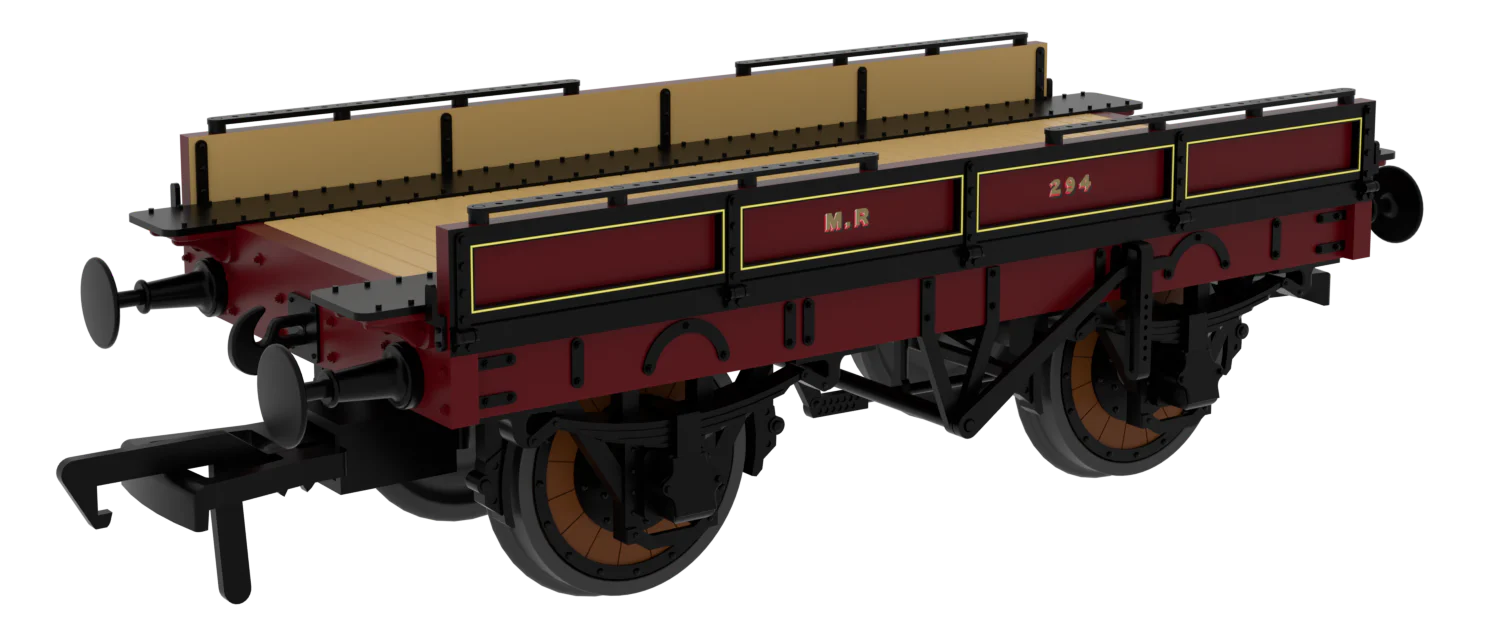
830002 MR ‘Evolution’ Open Carriage Truck No.294
- Open Carriage Truck
- Midland Livery No. 294
- Panelled Sides
- Open load - Brown & Son Woodchester
- Mansell wheels running in pinpoint bearings
- High level of detail above and below the floor line
- High quality livery application
- NEM coupler pockets
- 1:76 scale, (OO gauge)
- UK designed
The introduction of the railways came at a time when road travel was an uncomfortable and time-intensive endeavour. The railways made these journeys much easier; however, many people needed ways to travel to and from their nearest station as they weren’t at a convenient distance.
Horseboxes and cattle vans meant that horses could be transported with the customer to their destination, so it was only natural that they would also want their favourite carriage to join them so they could complete the rest of their journey in comfort.
Railway companies across the country added open carriage trucks to their rolling stock, and these could be hired by customers and businesses. Starting life as little more than a flat-bed wagon, the OCT evolved into a purpose-built vehicle.
By the end of the 1900s, these came in all shapes and sizes, from smaller versions suitable for a single road coach to much larger bogie vehicles and covered variants. They were commonly steel-plated across the top, with the plates extending from the ends of the truck's bed so the carriages could be loaded. The carriages were then held in place safely with crossbars that could be moved to hold the rolling load.
Despite being similar to flat-bed wagons, carriage trucks were built to passenger carriage-stock standards. This meant they had continuous brakes and longer springs, and could run at speed in passenger trains.
Various types of customers used an OCT to carry their vehicles. In addition to individuals wanting their personal transport, businesses regularly used them. This led to an interesting mix of vehicles being loaded and transported. Everything from removal companies moving their carriages on mass, to fire engines and artillery pieces were seen on the move. Circuses even used them from time to time!
Once safely loaded, carriages would normally remain on the same carriage truck until their journey was complete, no matter where in the country this might be. As such, they could be seen a long way from their point of origin.
Understandably, they were regularly paired with horse boxes so the owner could continue their journey upon arrival. However, they were also seen in block trains with other carriage trucks or travelling solo, as horses could be hired upon arrival.
To prevent snatching of couplings and the loads being jolted, common practice was to couple both horseboxes and carriage trucks at the head of goods trains, while in passenger trains, they could appear in any position.
As the quality of Britain's roads improved and vehicle sizes increased with the invention of the motor vehicle, the need for modest-sized open carriage trucks decreased. At this time, the majority of OCTs were superseded either by covered carriage trucks or wartime surplus well wagons or bogie flat wagons, although they could still sometimes be seen loaded with motor vehicles.
The Rapido Trains UK OO Gauge Evolution Open Carriage Truck represents a 4-wheel Pre-grouping era version that is 16 ft in length.
Much like the coaches from the Evolution range, each Evolution Open Carriage Truck is detailed with an array of key features and separately fitted parts that modellers associate with open carriage trucks of the pre-grouping era. These include metal strips on the vehicle floor for the carriage wheels, and removable crossbars that can be moved fore-and-aft and pinned into position, thus holding the load in place.
These complement the rest of the Evolution range and other rolling stock that would have been seen from the pre-grouping and grouping eras.
All Evolution Open Carriage Trucks are fitted with one of three variants of side panels, these include ‘Open Frame’, ‘Panelled’ and ‘Plain’ designs.
Product Information
Product Information
Shipping & Returns
Shipping & Returns
Description
- Open Carriage Truck
- Midland Livery No. 294
- Panelled Sides
- Open load - Brown & Son Woodchester
- Mansell wheels running in pinpoint bearings
- High level of detail above and below the floor line
- High quality livery application
- NEM coupler pockets
- 1:76 scale, (OO gauge)
- UK designed
The introduction of the railways came at a time when road travel was an uncomfortable and time-intensive endeavour. The railways made these journeys much easier; however, many people needed ways to travel to and from their nearest station as they weren’t at a convenient distance.
Horseboxes and cattle vans meant that horses could be transported with the customer to their destination, so it was only natural that they would also want their favourite carriage to join them so they could complete the rest of their journey in comfort.
Railway companies across the country added open carriage trucks to their rolling stock, and these could be hired by customers and businesses. Starting life as little more than a flat-bed wagon, the OCT evolved into a purpose-built vehicle.
By the end of the 1900s, these came in all shapes and sizes, from smaller versions suitable for a single road coach to much larger bogie vehicles and covered variants. They were commonly steel-plated across the top, with the plates extending from the ends of the truck's bed so the carriages could be loaded. The carriages were then held in place safely with crossbars that could be moved to hold the rolling load.
Despite being similar to flat-bed wagons, carriage trucks were built to passenger carriage-stock standards. This meant they had continuous brakes and longer springs, and could run at speed in passenger trains.
Various types of customers used an OCT to carry their vehicles. In addition to individuals wanting their personal transport, businesses regularly used them. This led to an interesting mix of vehicles being loaded and transported. Everything from removal companies moving their carriages on mass, to fire engines and artillery pieces were seen on the move. Circuses even used them from time to time!
Once safely loaded, carriages would normally remain on the same carriage truck until their journey was complete, no matter where in the country this might be. As such, they could be seen a long way from their point of origin.
Understandably, they were regularly paired with horse boxes so the owner could continue their journey upon arrival. However, they were also seen in block trains with other carriage trucks or travelling solo, as horses could be hired upon arrival.
To prevent snatching of couplings and the loads being jolted, common practice was to couple both horseboxes and carriage trucks at the head of goods trains, while in passenger trains, they could appear in any position.
As the quality of Britain's roads improved and vehicle sizes increased with the invention of the motor vehicle, the need for modest-sized open carriage trucks decreased. At this time, the majority of OCTs were superseded either by covered carriage trucks or wartime surplus well wagons or bogie flat wagons, although they could still sometimes be seen loaded with motor vehicles.
The Rapido Trains UK OO Gauge Evolution Open Carriage Truck represents a 4-wheel Pre-grouping era version that is 16 ft in length.
Much like the coaches from the Evolution range, each Evolution Open Carriage Truck is detailed with an array of key features and separately fitted parts that modellers associate with open carriage trucks of the pre-grouping era. These include metal strips on the vehicle floor for the carriage wheels, and removable crossbars that can be moved fore-and-aft and pinned into position, thus holding the load in place.
These complement the rest of the Evolution range and other rolling stock that would have been seen from the pre-grouping and grouping eras.
All Evolution Open Carriage Trucks are fitted with one of three variants of side panels, these include ‘Open Frame’, ‘Panelled’ and ‘Plain’ designs.