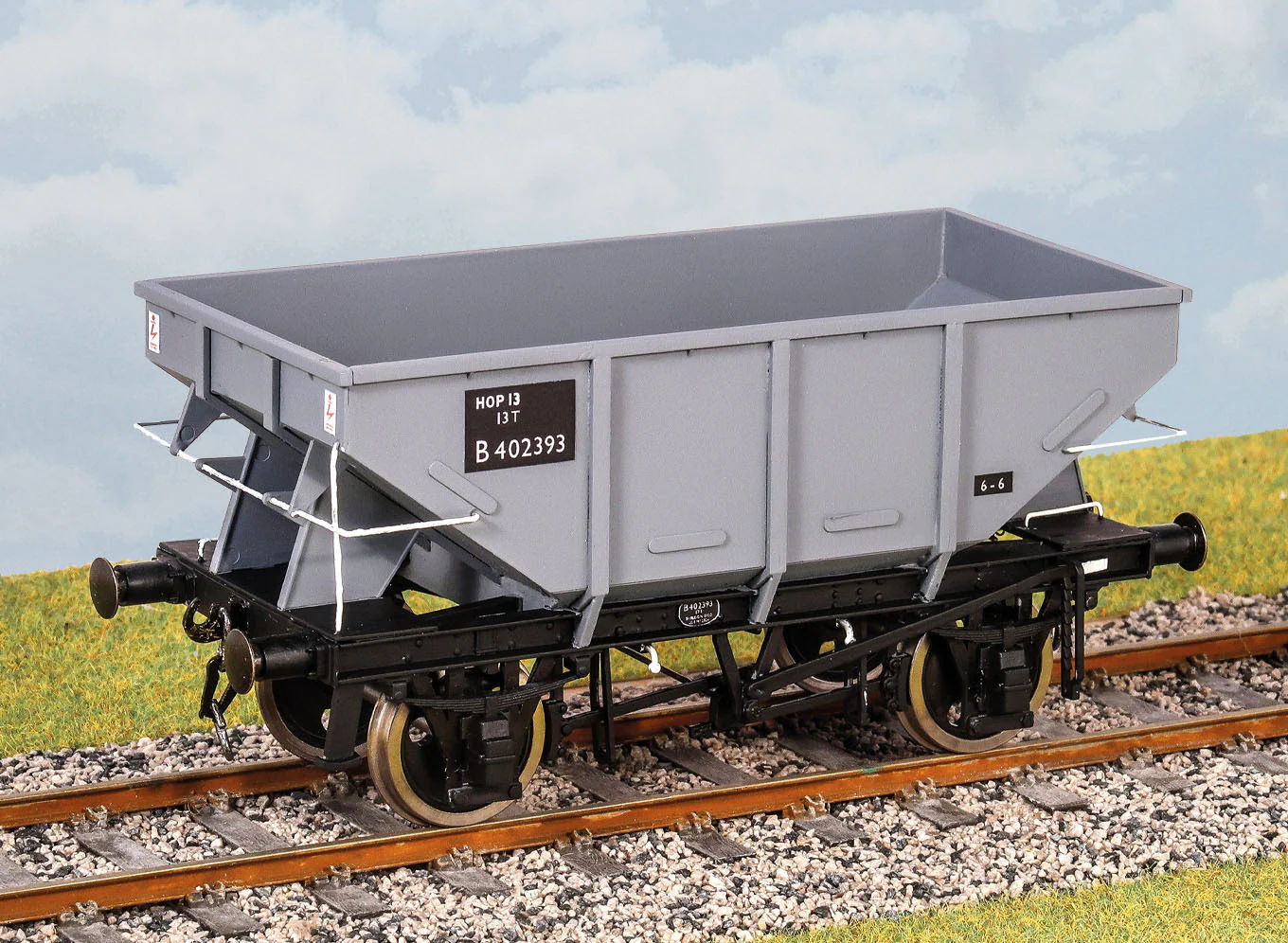
BR-LNER 13t Steel Hopper No.B402393 Wagon Kit
The British Railways LNER 13-ton steel hopper wagon was based on an LNER design but produced in the early British Railways era between 1949 and 1953. It marked a step forward from earlier wooden-bodied wagons by using an all-steel, welded construction, which offered improved durability and reduced maintenance needs. The design reflected the LNER’s long-standing experience with mineral wagons, but was adapted for post-war production methods in BR workshops such as those at Shildon, Faverdale, and York.
Over 2,600 of these wagons were built, and they became a common sight in the North Eastern Region. This was partly because many goods yards in the area had coal-drop staithes, making the bottom-discharge hopper design especially efficient for unloading bulk materials. While they were primarily intended for transporting coal, the hoppers proved versatile and were later used to carry stone, sand, and other aggregates.
The 13-ton steel hopper was a reliable and workmanlike vehicle that served across the UK for several decades. Its robust construction meant it could withstand heavy use, and it became a mainstay of freight traffic in the post-war period. Although newer wagon designs eventually replaced them, some examples remained in service into the early 1980s, making them one of the longer-lived mineral wagon types of the mid-20th century.
BR-LNER 13t Steel Hopper No.B402393 Wagon Kit
The British Railways LNER 13-ton steel hopper wagon was based on an LNER design but produced in the early British Railways era between 1949 and 1953. It marked a step forward from earlier wooden-bodied wagons by using an all-steel, welded construction, which offered improved durability and reduced maintenance needs. The design reflected the LNER’s long-standing experience with mineral wagons, but was adapted for post-war production methods in BR workshops such as those at Shildon, Faverdale, and York.
Over 2,600 of these wagons were built, and they became a common sight in the North Eastern Region. This was partly because many goods yards in the area had coal-drop staithes, making the bottom-discharge hopper design especially efficient for unloading bulk materials. While they were primarily intended for transporting coal, the hoppers proved versatile and were later used to carry stone, sand, and other aggregates.
The 13-ton steel hopper was a reliable and workmanlike vehicle that served across the UK for several decades. Its robust construction meant it could withstand heavy use, and it became a mainstay of freight traffic in the post-war period. Although newer wagon designs eventually replaced them, some examples remained in service into the early 1980s, making them one of the longer-lived mineral wagon types of the mid-20th century.
Product Information
Product Information
Shipping & Returns
Shipping & Returns
Description
The British Railways LNER 13-ton steel hopper wagon was based on an LNER design but produced in the early British Railways era between 1949 and 1953. It marked a step forward from earlier wooden-bodied wagons by using an all-steel, welded construction, which offered improved durability and reduced maintenance needs. The design reflected the LNER’s long-standing experience with mineral wagons, but was adapted for post-war production methods in BR workshops such as those at Shildon, Faverdale, and York.
Over 2,600 of these wagons were built, and they became a common sight in the North Eastern Region. This was partly because many goods yards in the area had coal-drop staithes, making the bottom-discharge hopper design especially efficient for unloading bulk materials. While they were primarily intended for transporting coal, the hoppers proved versatile and were later used to carry stone, sand, and other aggregates.
The 13-ton steel hopper was a reliable and workmanlike vehicle that served across the UK for several decades. Its robust construction meant it could withstand heavy use, and it became a mainstay of freight traffic in the post-war period. Although newer wagon designs eventually replaced them, some examples remained in service into the early 1980s, making them one of the longer-lived mineral wagon types of the mid-20th century.